Greek New Testaments: Spoiled for Choice!

Byzantine Text.

larryhurtado's avatarLarry Hurtado's Blog

Those who want to read the New Testament writings in Greek are now spoiled for choice, with several recent editions published.  Most recently, there is the edition just published mentioned earlier this week here, a project based in Tyndale House (Cambridge), edited by Dirk Jongkind.  A few years back now, there appeared the edition prepared under the auspices of the Society of Biblical Literature (edited by Michael Holmes, my posting on that edition here).  And, of course, there is also the most recent (28th) edition of what has become the standard hand-edition, the Nestle-Aland Greek New Testament (my posting here, and the edition’s home page here).

As indicated briefly in my earlier postings, each edition has its own character, layout, editorial policies, and intended uses.  The SBL edition and the brand-new Tyndale House edition both offer free digital forms.  The Nestle-Aland 28th edition can be read…

View original post 124 more words

Assessing NT students on translations of NT texts is a waste of time

thepatrologist's avatarThe Patrologist

Asking New Testament students to provide a translation of a known (chapter/verse) NT text in an exam or exegetical paper is a waste of time. It tests nothing and it discriminates nothing.

Every student ought to be getting 90-100% on this part of an assessment anyway, because either:

  • they are smart enough to check any translation they do with several English versions and realise their errors beforehand
  • they are smart and a little unscrupulous and are just going to vary an existing English version anyway.
  • if it’s an exam situation, and it’s a set text, then all we are testing is their preparation, not their ability to read Greek.

Why are we even asking them to do translations anyway? They are unlikely to create a translation that is genuinely better or meaningfully different from the hyper-abundance of English versions already in existence. And, assuming that this is a paper and…

View original post 658 more words

The Schaff paradox

“ecclesiastical Greek and Latin”

thepatrologist's avatarThe Patrologist

I usually give Philip Schaff a hard time, but let’s be honest – the ANF and NPNF series of translations (the former edited by Alexander Roberts and James Donaldson, the latter by Philip Schaff, and later with Henry Wace) – were amazing feats of translation and publishing for their times. They were, for the English speaking world, the Migne of their age, and animated with a little bit of the spirit of Migne, I would say. Let me quote from Schaff’s preface to the NPNF series 1:

My purpose is to furnish ministers and intelligent laymen who have no access to the original texts, or are not sufficiently familiar with ecclesiastical Greek and Latin, with a complete apparatus for the study of ancient Christianity. Whatever may be the estimate we put upon the opinions of the Fathers, their historical value is beyond all dispute. They are to this day and…

View original post 390 more words

John Wesley on the Biblical Languages

Against Bart Ehrman and JWs, many Orthodox are ill-equipped.

John Meade's avatarLXX Studies

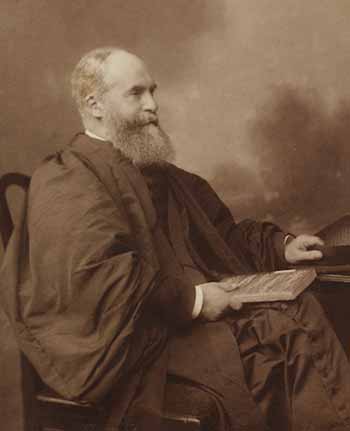
John WesleyWith this post, I want to begin a series “X Christian from Church History on the Biblical Languages.” I often share these sorts of quotes with my seminary students, and I thought they might be helpful to others as well. These posts are intended to be short, mainly consisting of a quote, which can be rather long at times, with brief commentary from me to provide some context.
View original post 456 more words

Supervisors & Programs for Septuagint Studies – Part II

Had to Reblog this due to the mention of Trevor V. Evans and Dr. John A. L. Lee.

William A. Ross's avatarSeptuaginta &c.

We all wish we could study with H. B. Swete (1835-1917)

A few weeks ago I posted the first of what will be a three-part series on supervisors and post/graduate programs in Septuagint studies. As I mentioned, this is mostly for the benefit of students considering pursuing further study in the discipline, which is pretty decentralized and specialist. Since there are not a lot of scholars whose work is primarily focused on Septuagint, there are even fewer programs and resources to learn about it. I’m trying to lower the barriers to entry just a little bit here on this site.

The previous post was focused on North America and the United Kingdom. This (admittedly brief) post is titled “Worldwide,” by which I mean scholars in places that are not Europe, which will come in a third and final post. If I have forgotten someone obvious please let me know and…

View original post 450 more words

Review: Mortality

MortalityMortality by Christopher Hitchens

My rating: 1 of 5 stars

Sad. Hitchen’s ‘theology’ is lower than mine when I was 17.

And all our yesterdays have lighted fools

The way to dusty death. Out, out, brief candle!

Life’s but a walking shadow, a poor player,

That struts and frets his hour upon the stage,

And then is heard no more. It is a tale

Told by an idiot, full of sound and fury,

Signifying nothing.

-Macbeth, Act V, scene 5

View all my reviews

Review: Judaism: A Very Short Introduction

Judaism: A Very Short IntroductionJudaism: A Very Short Introduction by Norman Solomon

My rating: 1 of 5 stars

This Very Short Introduction begins well enough, the first two paragraphs even succinctly evince the false presupposition underlying the Protestant religions. However, shortly thereafter anti-Christian vitriolic saturates the narrative. Sadly, all of that vitriolic about Christianity – when it comes to Orthodox Christianity – is mistaken and incorrect and in a future blog post I hope to correct the appropriate places.

As for the rest of this small book, I do not know enough about post-Second Temple Judaism (hence why I read this) to comment, but I must say that I received the impression that Solomon was painting a picture with a Postmodern brush. Pre-Second Temple Judaism is mentioned so briefly that a separate ‘Pre-Second Temple Judaism: A Very Short Introduction’ is truly in order with this present volume renamed appropriately. Then again, I guess that’s what Wikipedia is for.

View all my reviews